























Here’s a quick recap of the crypto landscape for Monday (February 2) as of 9:00 a.m. UTC.
Get the latest insights on Bitcoin, Ether and altcoins, along with a round-up of key cryptocurrency market news.
Bitcoin and Ether price update
Bitcoin (BTC) was priced at US$76,827.62, down by 0.9 percent over 24 hours.

Bitcoin price performance, February 2, 2025.
Chart via TradingView
Bitcoin slid to its lowest level since April last year over the weekend, briefly touching the US$74,000 mark. The drop capped Bitcoin’s fourth consecutive monthly decline and its longest losing streak in seven years.
“The crypto market is currently suffering from panic among speculative participants,” said Samer Hasn, senior market analyst at XS.com, pointing to a steep contraction in derivatives activity and persistent outflows from spot Bitcoin exchange-traded funds.
According to CoinGlass data, total crypto futures open interest has fallen to US$109 billion, down 53 percent from its all-time high, while Bitcoin futures open interest alone has declined 44 percent from peak levels.
Geopolitical uncertainty has added another layer of strain. “Concerns surrounding the situation with Iran were the main news factor weighing on the market,” said Vasily Shilov, chief business development officer at SwapSpace. Shilov noted that heightened geopolitical rhetoric, combined with trade threats and the Federal Reserve’s decision to keep rates unchanged, has pushed investors toward liquid assets and away from higher-risk exposure.
Some analysts caution that bearish sentiment may persist into the first half of the year. Ray Youssef, chief executive officer of NoOnes, said capital outflows into precious metals and uncertainty around US fiscal policy have tilted market dynamics firmly in favor of sellers.
While Bitcoin found temporary support near US$75,000, Youssef said the US$73,000 level is now critical, with a sustained break potentially accelerating losses. Investors now look towards upcoming developments on US economic data and the Congress’ direction on crypto policy as signals on whether the current drawdown marks another stress test or the start of a deeper bear phase.
Ether (ETH) was priced at US$2,248.63, down by 3.3 percent over the last 24 hours.
Altcoin price update
- XRP (XRP) was priced at US$1.59, trading flat over 24 hours.
- Solana (SOL) was trading at US$101.74, down 2.4 percent over 24 hours.
Today’s crypto news to know
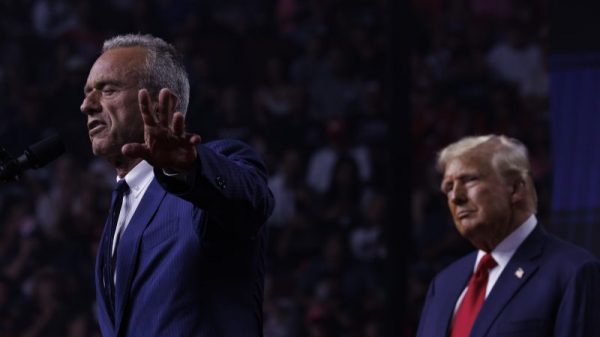
Bitcoin weekend slide wipes out Trump-era rally
Bitcoin’s latest sell-off has erased the entirety of its Trump-era gains, with prices tumbling over the weekend to around US$77,000 amid thin liquidity and forced liquidations.
The drop accelerated after Bitcoin failed to hold the US$80,000 level, briefly slipping below US$76,000 and triggering rapid sell-offs that shaved thousands of dollars off the price in minutes.
Notably, the drop also pushed Bitcoin below the average entry price of Strategy (NASDAQ:MSTR), a symbolic line that added pressure in a market already jittery from slowing ETF inflows and elevated leverage.
The downturn marks the cryptocurrency’s lowest level since April 2025, when markets were rattled by US tariff announcements under Donald Trump. In total, Bitcoin is now down nearly 12 percent year to date and roughly 25 percent since Trump’s second-term inauguration, reversing a rally that once carried it close to US$125,000 on hopes of crypto-friendly policy.
Those expectations included looser regulation, the passage of stablecoin legislation, and the winding down of high-profile enforcement cases. Instead, tariff threats and persistent geopolitical tensions have undercut the “digital gold” narrative.
Analysts are now watching the US$74,500 and US$69,000 levels as potential stress points, warning that a break could deepen the risk-off move.
Washington scrambles to salvage landmark crypto bill
Senior Wall Street bankers, crypto executives, and policymakers are set to meet in Washington as the fate of the long-awaited Clarity Act hangs in the balance, sources familiar with the matter told CoinDesk.
The White House has stepped in to mediate a standoff between major banks and crypto firms, including Coinbase, over whether platforms should be allowed to pay yield on stablecoin balances.
The bill is designed to establish clear lines of authority across US crypto markets, covering everything from exchanges and DeFi to tokenized real-world assets. Supporters say passing it would cement crypto’s legitimacy within mainstream finance and open the door for deeper bank participation.
But progress has stalled after the Senate Agriculture Committee advanced part of the bill on a narrow, party-line vote, raising doubts about its ability to win broader Democratic support.
Coinbase CEO Brian Armstrong has publicly criticized recent drafts, arguing that certain key amendments would undermine stablecoin incentives.
Chinese crime networks moved US$16 billion in crypto last year, report finds
Chinese-language organized crime groups moved an estimated $16 billion in cryptocurrency in 2025, accounting for roughly one-fifth of global illicit crypto activity, according to a new report from Chainalysis.
These networks rely heavily on Telegram-based “guarantee” channels that act as informal escrow and marketing hubs for money laundering services. Investigators say the platforms facilitate not just laundering, but also human trafficking, scam operations, and the sale of equipment used in Southeast Asian fraud centers.
Stablecoins such as USDT and USDC are favored for their liquidity and lower volatility, which helps criminals avoid losses while moving funds. Chainalysis estimates the networks laundered roughly US$44 million per day, often serving clients ranging from organized crime syndicates to sanctioned state actors.
Securities Disclosure: I, Meagen Seatter, hold no direct investment interest in any company mentioned in this article.
Securities Disclosure: I, Giann Liguid, hold no direct investment interest in any company mentioned in this article.