
















China on Tuesday banned exports of goods that could be used for military purposes to Japan, a move that escalates tensions between Beijing and a key U.S. ally as disputes intensify over Taiwan.
The Chinese Commerce Ministry said in a statement that any items that have a dual use — civilian and military — would no longer be exported to Japan.
The government did not offer specifics on which items would be included in the ban. But state-affiliated media said Beijing was considering whether to include rare-earth minerals.
Japanese leaders have increasingly linked Taiwan’s fate to Japan’s own security, with Japan’s Prime Minister Sanae Takaichi warning that a Chinese move against the island could amount to a ‘survival-threatening situation’ for Japan — a legal threshold that could permit military action under Japan’s self-defense laws.
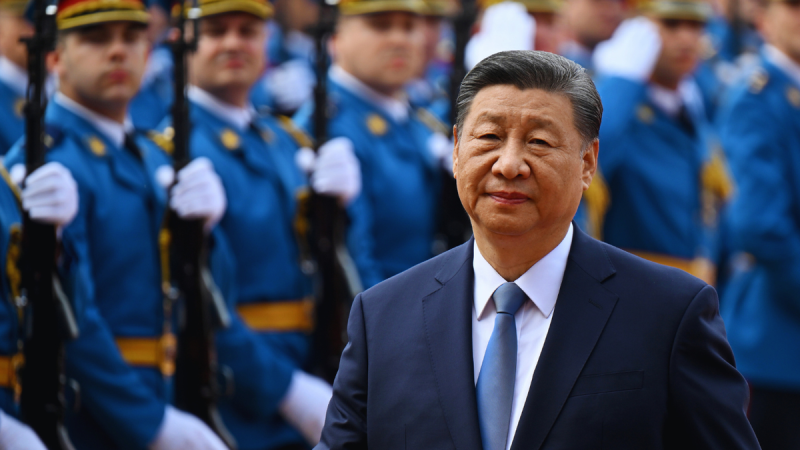
In his New Year’s address, Chinese President Xi Jinping called the ‘reunification’ of China and Taiwan ‘unstoppable.’ His remarks came days after China concluded live-fire drills to simulate a blockade of the island.
The export crackdown echoes a 2010 episode when China halted rare-earth exports to Japan for nearly two months during a territorial dispute.
The rare earths dispute became an early example of China’s willingness to weaponize trade, prompting U.S. and allied defense planners to reassess how deeply military supply chains depended on Beijing. The episode accelerated efforts to diversify sourcing, though China remains a dominant player in several critical sectors.
China controls roughly two-thirds of global rare-earth mining and the vast majority of processing capacity, a dominance that prompted the Trump administration to push to diversify supply chains and revive domestic production as a national security priority.
For years, Washington had largely left rare earths to the market, even as U.S. mines closed and production migrated to China.
The Trump administration broke with decades of hands-off policy by using Pentagon funding and emergency authorities to support MP Materials at California’s Mountain Pass mine, one of the first direct U.S. government interventions to restore rare earth processing capacity seen as critical to modern weapons systems.