
















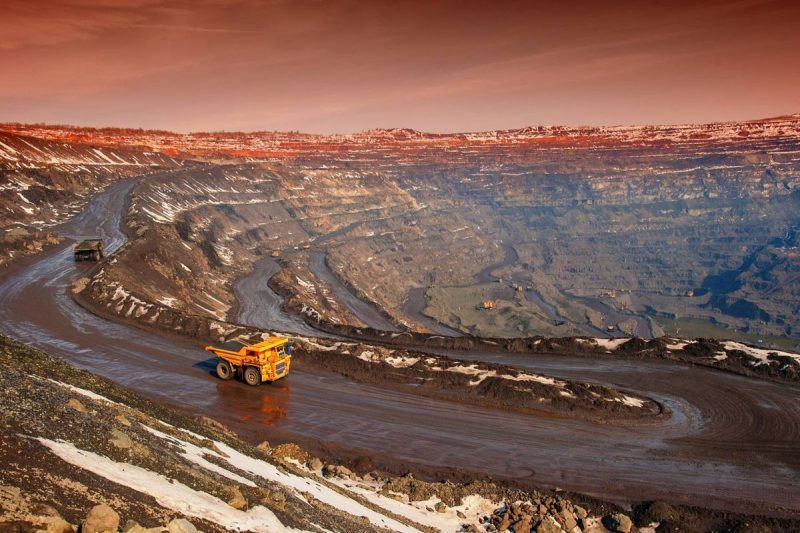

Iron ore prices have strengthened since bottoming out in September 2024, but the base metal faced headwinds in 2025 as tariff threats and investor uncertainty weighed on the market.
Usage in steel makes iron ore one of the most widely used and essential materials in the world, and as a result its fortune is highly dependent on the strength of the construction and manufacturing sectors.
Iron ore has also seen increased demand from electric vehicle (EV) batteries over the last several years.
Among all countries, China leads the world in steel production, but lacks domestic supply to meet demand; it is also the world’s largest importer of base metals. As one of the biggest manufacturing bases and a significant source of demand for construction and EV production, China exerts considerable influence on iron ore prices.
Additionally, as 2026 begins, the definitive period for the EU’s Carbon Border Adjustment Mechanism (CBAM) is starting — it will apply levies to high-carbon imports such as steel.
How did iron ore prices perform in 2025?
Iron ore started 2025 at US$99.44 per metric ton (MT) on January 6, then hit US$107.26 on February 12.
The start of March saw a steep decline for prices as they retreated toward the US$100 mark, then climbed back to US$104.25 on April 2; a rout in the base metals market saw prices fall to US$99.05 on April 9.
While other metals recovered, iron ore continued to track lower, reaching US$97.41 on May 5 and ultimately sinking to a yearly low of US$93.41 on July 1. During the third quarter, iron ore prices gained momentum, rising above the US$100 mark in August and reaching a quarterly high of US$106.08 on September 8.
Prices were largely rangebound in Q4, dropping below US$104 only once on November 7, then recovering to post a yearly high of US$107.88 on December 4. Prices had retreated to US$106.13 by December 5.
Key iron ore price drivers in 2025
All in all, prices for iron ore didn’t fare too badly in 2025.
The biggest factor affecting growth was a significant fall-off during the first half of the year as pressures mounted from a continuing slump in the Chinese property sector and the threat of US tariffs.
The Chinese real estate sector has been in steep decline since 2021, when two of the nation’s top developers — Country Garden and Evergrande — declared bankruptcy after incurring hundreds of billions of dollars in debt. Since then, the government has introduced various stimulus measures, but has failed to turn the sector around.
As mentioned, because of the sheer size of the property market in China, it is a significant demand driver for steel products and has an outsized influence on the global iron ore market.
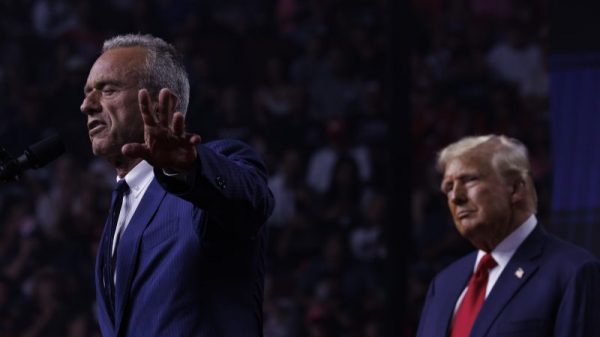
Another noteworthy headwind for iron ore price levels this past year was the threat of US tariffs. In early April, US President Donald Trump announced his “Liberation Day” tariffs, which applied a 10 percent levy across the board, and threatened retaliatory tariffs to close trade deficits with most countries.
The move sparked fears of a global recession and triggered a rout in equities and commodities markets, sending prices plunging. However, most markets rebounded quickly as plans were dialed back after a squeeze in the bond market that sent 10 year treasury yields up by more than half a percentage point.
Further iron ore price pressures came later in the year, when the massive Simandou mine in Guinea shipped its first iron ore, destined for smelters in China, on December 2.
Two consortia of companies own the mine. Blocks three and four have a 45/40/15 ownership split between Rio Tinto (ASX:RIO,NYSE:RIO,LSE:RIO), Chinalco and the Guinea government, and blocks one and two have a 45/35/20 split between Winning International, China Hongquiao Group (HKEX:1378,OTCPL:CHHQF) and United Mining Supply.
The mine will ramp up production over the next 30 months, and is expected to produce 15 million to 20 million MT in 2026 and 40 million to 50 million MT in 2027.
What trends will move the iron ore market in 2026?
“Construction accounts for about 50 percent of steel consumption in terms of end users. The weakness of the property market has, of course, weighed on steel demand and therefore pig iron production. However, the driver for China’s steel production has been industrialisation and urbanisation during the past two decades,” he said.
Sardain went on to state that despite a shift in focus from fixed assets to manufacturing, services and technology, overall steel demand is set to move lower. Although the decline won’t last forever and the property market will stabilize, the effect of even a mild rebound on steel production will be limited:
“However, steel production and iron ore demand have been supported by strong exports in markets such as Southeast Asia, East Asia, the Middle East, Latin America and Africa, mitigating the impact of a lower domestic steel demand. Whether steel exports can increase from their current level is debatable, and we forecast a lower steel production in China over time.’
On the tariff front, US levies aren’t likely to have much impact. Sardain pointed out that while US steel demand exceeds its production capacity, Chinese imports remain a minimal factor.
Meanwhile, the US is primarily producing steel in lower-carbon electric arc furnaces from ferrous scrap.
Although steel tariffs from Canada and Brazil are set at 25 and 50 percent, respectively, both countries have exemptions for iron ore pellets, and Canadian ferrous scrap is covered under CUSMA provisions.
But with the trade pact set to be renegotiated in 2026, it’s uncertain what it means for steel and, by extension, iron products, in the midterm. The best-case scenario is that Canadian steel will receive an exemption.
Still, the risk remains that current CUSMA blanket exemptions will be removed, allowing the US to apply additional tariffs on Canadian goods crossing the border. Likewise, in Europe, the CBAM came into effect on January 1, 2026.
While the impact may take some time to work through the market, it will still have downstream effects for producers that want to avoid tariffs on imported products. This may be one reason Chinese steel producers are switching from higher-carbon blast furnaces to electric arc furnaces in the smelting process.
“Currently, electric arc furnaces account for about 12 percent of China’s steel production, set to increase to 18 percent by the first part of the next decade,” Sardain said, noting that China is looking to cap its emissions by 2030.
The main challenge for iron ore is waning demand, as the primary input for electric arc furnaces is scrap steel, not raw iron. “Countries which will see their steel production increasing (primarily India, but to some extent Russia, Brazil or Iran) are not iron ore importers because they are self-sufficient. Steel production in the EU is flat to lower with more production coming from electric arc furnaces as part of the decarbonisation process,” Sardain said.
Soft demand growth, however, is expected to meet increasing mine supply, further dragging on prices in 2026.
Sardain suggested that all major iron ore miners will increase their production in 2026, with the largest boost coming from Guinea’s Simandou, which could shake up supply chains.
“The blocks one and two are owned by a Chinese-Singaporean consortium. It will provide China with the opportunity to diversify its supply from the major Australian producers (something that the country tried to do for the past 15 years unsuccessfully) and it will shift the supply-demand momentum in favour of China,” he said.
Additionally, the mine is important because of its 65 percent iron content.
Iron ore price forecast for 2026
Sardain expects iron ore prices to remain muted in 2026.
“We believe that price should drop below the US$100 per MT mark, although it could stay above this level in H1 due to seasonality … so, overall, prices staying between US$100 to US$105 per MT in H1, then declining below US$100 per MT in H2, with the ramp-up of the Simandou mine being a determining factor,” he said.
This is largely in line with estimates from other firms. BMI is predicting a 2026 price of US$95, while RBC Capital Markets sees iron ore averaging US$98; the overall consensus stands at US$94.
Securities Disclosure: I, Dean Belder, hold no direct investment interest in any company mentioned in this article.