



















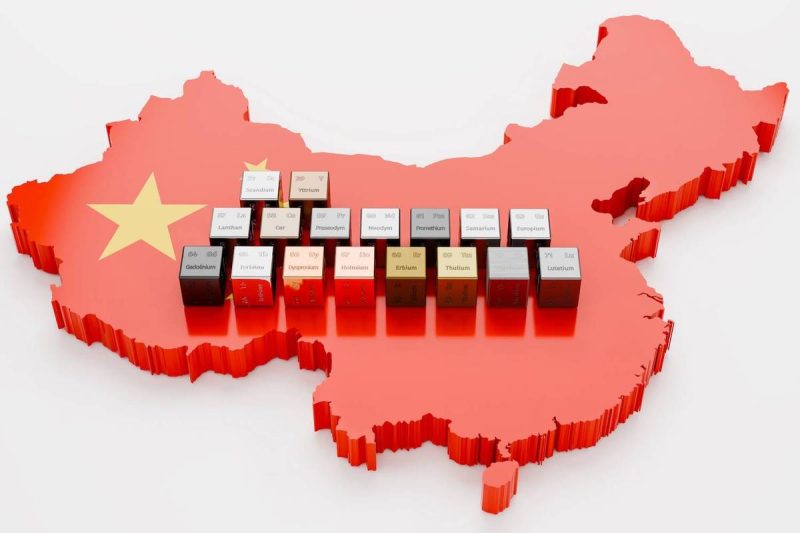
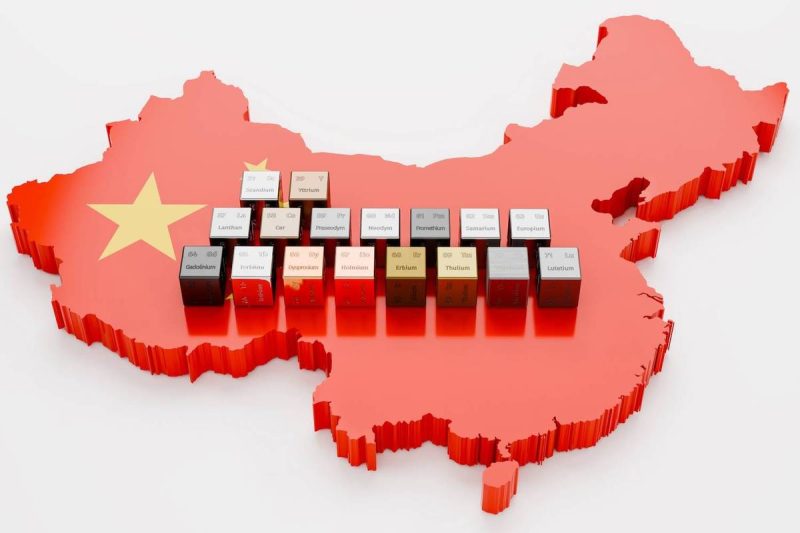

As governments scramble to secure supplies of rare earth elements, a new engineering study from Malaysia has cast fresh light on why China continues to dominate one of the most critical parts of the supply chain—processing.
The research zeroes in on what many industry insiders already regard as the hardest step in rare earth production: separating neodymium and praseodymium to the ultra-high purity levels required for permanent magnets.
Rare earth elements tend to occur in clusters and behave almost identically at the chemical level. Neodymium and praseodymium, two of the most important inputs for high-performance magnets, sit next to each other on the periodic table.
This proximity makes them extremely difficult to separate cleanly. Even with viable ore, the separation step is so complex and capital-intensive that it continues to favor countries like China that already operate such systems at scale.
What makes this phase more complex, according to the research, is that separating neodymium from praseodymium to magnet-grade purity requires an extraordinary number of repetitions.
Their modeled plant design calls for roughly 62 equilibrium stages, compared with as few as 16 stages for earlier, bulk separations. In practical terms, this means that a facility capable of producing magnet-grade material must be vast, expensive, and technically sophisticated.
Loosening the grip
China’s dominance stems largely from its ability to meet this requirement at industrial scale. While the country accounts for about 60 percent of global rare earth mining, it processes close to 90 percent of the world’s supply.
That dominance did not happen by accident. After acquiring early separation know-how from France in the 1980s, China spent decades refining solvent extraction techniques, training engineers, and scaling plants far beyond what most countries were willing or permitted to build.
Today, China produces roughly 70,000 metric tons of refined rare earths per year. It also controls nearly all processing of heavy rare earth elements, which are even more difficult to separate and are critical for high-temperature and defense applications.
Thus, the Malaysian study reinforces why that advantage persists. It shows that even when geology is favorable, processing remains the true barrier to entry.
This reality has sharpened concerns in the US and its allies, especially as China has shown a willingness to use rare earths as a geopolitical tool.
In 2010, Beijing restricted exports to Japan during a diplomatic dispute. In 2023, it imposed global restrictions on the export of rare earth processing and separation technologies, making it harder for competitors to build midstream capacity.
Those moves have heightened urgency in Washington. Rare earths are essential to modern defense systems, from fighter jets and submarines to precision-guided munitions, as well as to electric vehicles and consumer electronics.
Despite being the world’s second-largest rare earth producer, most material mined domestically has historically been sent to China for separation. Until recently, the country lacked commercial-scale facilities capable of turning ore into finished magnet materials.
This is the reality that the rest of the world is trying to slowly change. Since 2020, the US Department of Defense has committed hundreds of millions of dollars to rebuilding a “mine-to-magnet” supply chain, with projects concentrated largely in Texas.
These include light and heavy rare earth separation plants, metal and alloy production, and permanent magnet manufacturing.
Even so, near-term capacity remains small relative to China’s. New facilities will take years to ramp up, and most focus initially on light rare earths rather than the heavier elements where China’s dominance is nearly absolute.
From Project Vault to Africa: US accelerates rare earth supply chain strategy
The United States is stepping up efforts to diversify rare earth supply beyond China, backing early-stage projects aimed at strengthening non-Chinese production and processing capacity.
One such move came in February, when the US Trade and Development Agency (USTDA) confirmed its intention to support Altona Rare Earths’ (LSE:REE) Monte Muambe rare earths project in Mozambique.
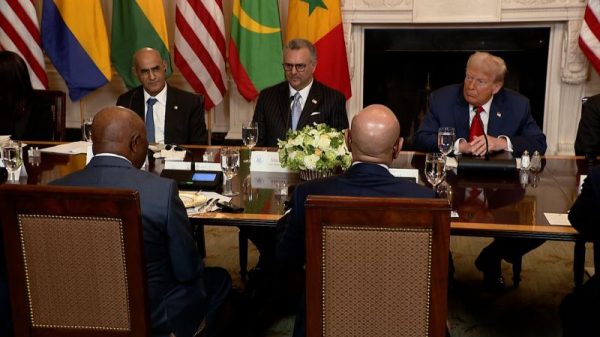
The announcement was made by USTDA Deputy Director and Chief Operating Officer Thomas Hardy during a high-level forum on US support for critical mining projects in sub-Saharan Africa, attended by Altona executives.
USTDA’s support is expected to help define the technical and financial development pathway for Monte Muambe, which hosts rare earth elements used in permanent magnets, defence systems and energy transition technologies. The backing remains subject to the execution of a formal grant agreement.
The commitment aligns with broader US initiatives aimed at reshaping critical mineral supply chains, including recent announcements tied to Project Vault — Washington’s effort to secure strategic reserves and reduce reliance on Chinese-dominated processing and refining. It also coincides with the launch of the Forum on Resource Geostrategic Engagement (FORGE), unveiled at the 2026 Critical Minerals Ministerial as a platform to mobilise capital and diplomatic support for resilient mineral supply networks.
While Monte Muambe remains at an early stage, Altona is also awaiting assay results from recent fluorspar and gallium drilling, which the company believes could further enhance the project’s strategic appeal. Fluorspar is a key industrial mineral used in steelmaking, chemicals and battery supply chains, areas where China also holds significant market share.
Taken together, the US backing of Monte Muambe underscores how governments are increasingly using policy tools, financing support and strategic partnerships to counterbalance China’s continued dominance in rare earth processing, a reality highlighted in the recent Malaysian report.
Securities Disclosure: I, Giann Liguid, hold no direct investment interest in any company mentioned in this article.